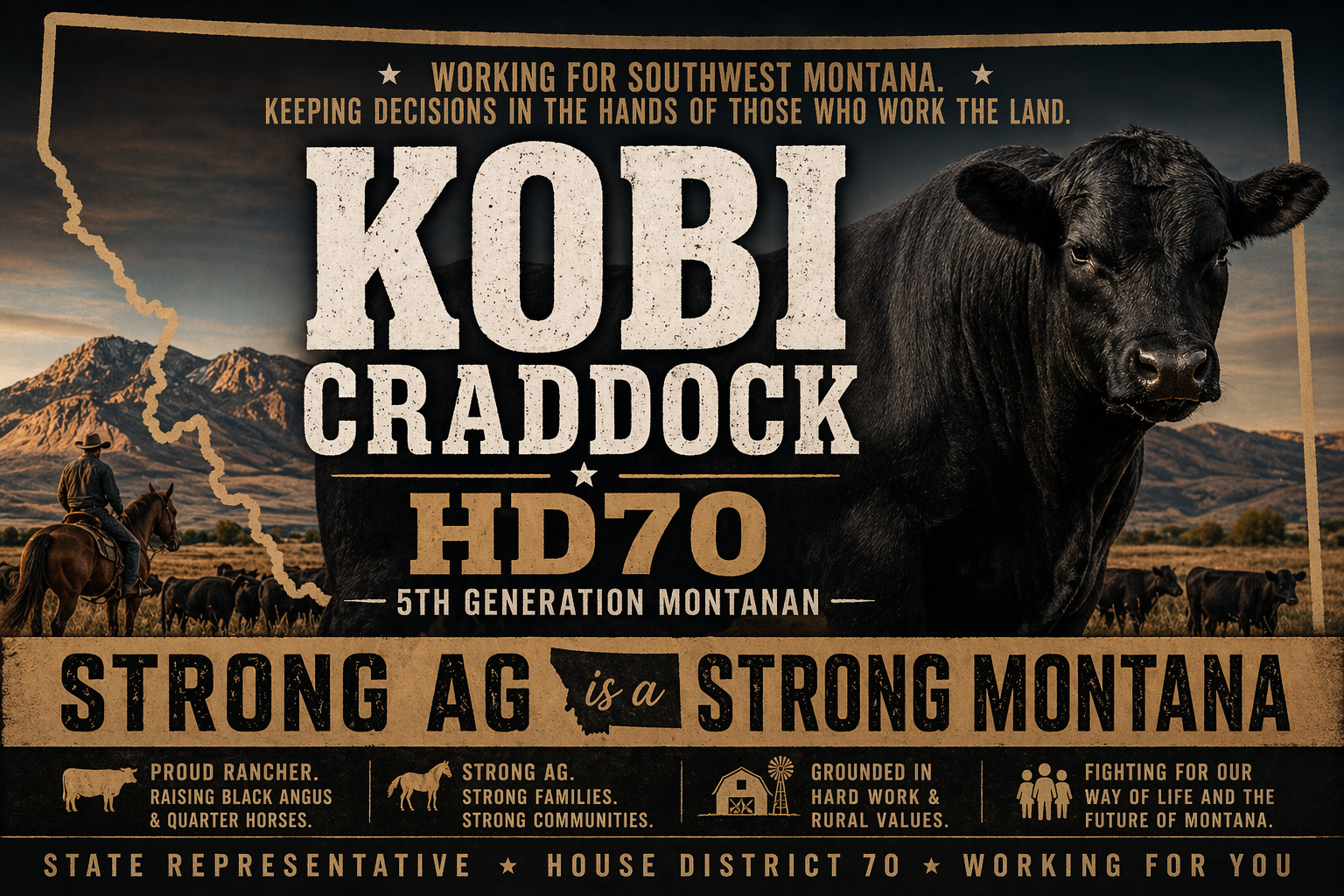
Montana’s public lands belong to all of us.
They are where we hunt, fish, hike, camp, graze livestock, cut timber, raise families, and pass traditions from one generation to the next. They are also an important part of our rural economy, our wildlife habitat, and our identity as Montanans.
I believe strongly in public lands in public hands.
That means opposing efforts to sell off or privatize public land, while also recognizing that public land has to be actively and responsibly managed.
Protect Public Access
Access matters.
A public piece of ground does little good if ordinary Montanans cannot reasonably reach it.
I support protecting existing public access and working toward practical solutions where access is blocked or uncertain. I also believe access policy has to respect private property rights and the people who live and work next to public lands.
Those two principles do not have to conflict.
We should look for solutions that expand opportunity for hunters, anglers, recreationists, and families while treating landowners fairly and respectfully.
Responsible Land Management
Leaving land unmanaged is not conservation.
Montana has seen firsthand what happens when forests become overloaded with deadfall and hazardous fuels. Wildfire threatens homes, livestock, wildlife habitat, watersheds, timber resources, and entire rural communities.
Where conditions call for it, I support responsible logging, thinning, grazing, prescribed fire, and other proven management tools.
Good stewardship means using the right tool in the right place.
Protect Working Landscapes
Ranchers and farmers are some of Montana’s most important land stewards.
Grazing can help manage vegetation, reduce fuel loads, maintain open space, and support rural economies while producing food.
I will support policies that recognize the role agriculture plays in maintaining Montana’s landscapes rather than treating working lands and conservation as opposing ideas.
Some of the best conservation in Montana happens because families have cared for the same ground for generations.
Local Voices Should Matter
Decisions about Montana land should not be made solely by people who never have to live with the consequences.
Ranchers, sportsmen, county officials, conservationists, recreationists, tribal communities, firefighters, loggers, and other local stakeholders deserve a meaningful seat at the table.
I believe the best solutions usually come from listening to the people closest to the land.
That means less political grandstanding and more cooperation.
Wildlife and Habitat
Healthy wildlife populations and strong agricultural communities can coexist.
Montana should protect important habitat while making sure wildlife management decisions remain practical, science-based, and responsive to the people who live with wildlife every day.
I support strong state management and believe Montana should have a major voice in managing its wildlife and natural resources.
Keep Montana From Becoming Pay-to-Play
Montana should never become a place where access to hunting, fishing, and open country is reserved only for those who can afford it.
Our outdoor heritage belongs to working families too.
I will resist policies that push Montana toward a system where ordinary residents are increasingly locked out while wealthy outside interests gain greater control over access and opportunity.
Public land should remain public.
Finding Common Ground
Public lands debates are too often treated as if there are only two sides.
There are not.
A rancher can care deeply about wildlife habitat. A hunter can respect private property. A conservationist can support responsible timber management. A logger can care about healthy forests.
Most Montanans already understand that.
Our policies should reflect it.
I want to bring agriculture, conservation, recreation, and local communities together around practical solutions that protect access, improve land health, reduce wildfire risk, and preserve Montana’s outdoor heritage.
Public lands in public hands. Responsible management. Respect for private property. Access for future generations.

