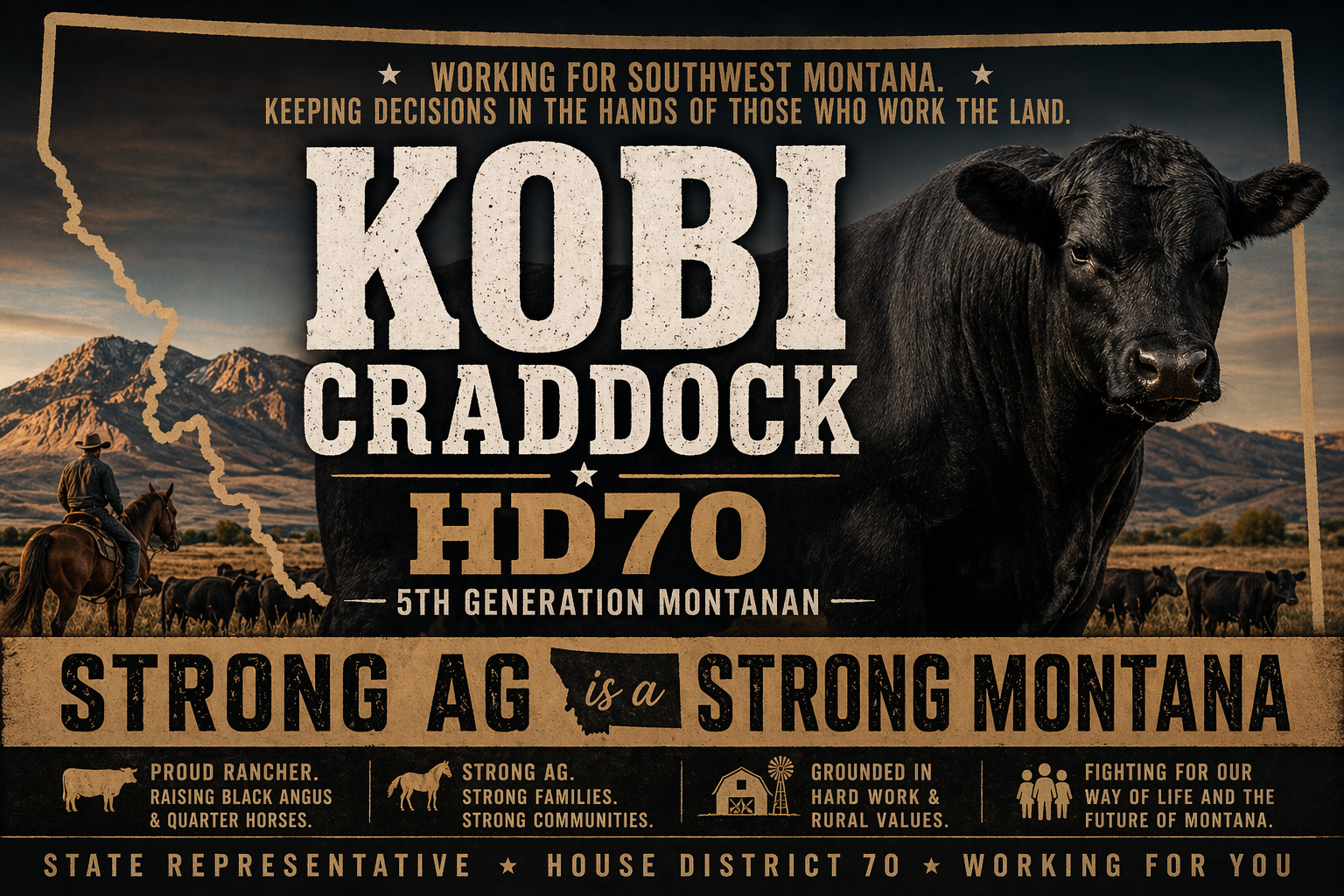
Government should work for the people it represents.
I believe public office is a responsibility, not a title. Elected officials should be accessible, transparent, willing to explain their decisions, and accountable to the people who sent them to Helena.
My approach is simple: listen first, understand the issue, and judge legislation by whether it is good for House District 70 and for Montana.
I do not believe good ideas belong to one political party.
District Before Party
A state representative is elected by the people of a district, not by party leadership.
I believe my first responsibility should always be to the people of House District 70.
That means I will support legislation from either party when I believe it benefits the district, and I will oppose legislation from either party when I believe it does not.
My vote should never be automatic simply because of the letter next to someone’s name.
Montanans deserve representatives who are willing to think independently and explain why they voted the way they did.
Listening Before Legislating
Good policy starts with listening.
Legislators should understand an issue before trying to regulate it.
I believe the people most affected by a policy should have a meaningful voice in developing it. That means talking with ranchers before writing agriculture policy, tradespeople before changing construction laws, teachers before changing education policy, and local communities before making decisions that affect their future.
Government works better when policymakers listen to people with real-world experience.
I will not pretend to know everything.
Part of leadership is knowing when to ask questions and when to learn from someone who understands an issue better than you do.
Working Across Party Lines
Montana has difficult problems that cannot always be solved through party-line politics.
Property taxes, housing, agriculture, wildfire, workforce shortages, infrastructure, water, and public-land access affect Republicans, Democrats, independents, and people who do not care about politics at all.
I believe legislators should be willing to sit down with people they disagree with and look for areas where they can work together.
Compromise does not mean abandoning your principles.
It means recognizing that sometimes the best solution is one where everyone gets part of what they need instead of one side getting everything it wants.
Limited Government Where It Makes Sense
I believe government should stay out of people’s lives when there is no good reason for it to be involved.
Unnecessary rules, duplicative regulations, and excessive bureaucracy can make it harder for families, farmers, ranchers, workers, and small businesses to succeed.
I support reviewing regulations and eliminating those that no longer serve a clear purpose.
At the same time, I do not believe the answer to every problem is simply saying government should do nothing.
There are times when state government has a legitimate responsibility to maintain infrastructure, protect public safety, manage natural resources, enforce fair markets, educate our children, and respond to disasters.
The question should always be whether government involvement solves a real problem and provides value to the people paying for it.
State and Local Control
I believe decisions should generally be made as close as possible to the people they affect.
Montana communities understand Montana problems.
Where appropriate, I support returning decision-making authority from distant federal agencies to Montana and giving local communities flexibility to address their own needs.
At the same time, state government should avoid replacing federal one-size-fits-all rules with state one-size-fits-all rules.
Dillon, Butte, Wisdom, Melrose, and rural Beaverhead County do not always face the same challenges.
Local voices matter.
Transparency
Government should not operate behind closed doors whenever decisions affect the public.
Montanans should be able to understand how their tax dollars are being spent, what legislation is being considered, and how their elected officials are voting.
I support strong public-records and open-government principles while recognizing legitimate privacy and security concerns.
I also believe elected officials should communicate directly with their constituents rather than appearing only during election season.
If I vote for something, I should be willing to explain why.
If I make a mistake, I should be willing to acknowledge it.
Accountability requires both.
Responsible Spending
Every dollar government spends ultimately comes from taxpayers.
I believe those dollars should be treated with respect.
Responsible budgeting does not mean refusing to invest in anything.
It means distinguishing between necessary investments and wasteful spending.
Infrastructure, workforce development, wildfire prevention, schools, and other priorities can save taxpayers money over the long term when they are planned properly.
I believe Montana should demand measurable results from major public investments and regularly evaluate whether programs are accomplishing what they were created to do.
If a program is not working, we should be willing to change it.
Keeping Special Interests in Check
Every citizen and organization has the right to advocate for what they believe.
But elected officials should never forget who they work for.
Campaign contributions, lobbyists, political parties, and powerful organizations should not determine how a legislator votes.
I believe every proposal should be judged on its merits and its effect on ordinary Montanans.
A representative should be willing to tell powerful interests “no” when their interests conflict with those of the district.
Accessible Representation
People should not need to know a lobbyist or drive to Helena to talk to their representative.
I intend to remain accessible to the people I represent.
That means answering questions, meeting with constituents, attending community events, holding public conversations, and staying connected to the communities throughout House District 70.
Representation should not stop when the legislative session ends.
Some of the most valuable information a legislator receives comes from conversations at a coffee shop, ranch, job site, school, small business, or community meeting.
Those voices deserve to reach the Capitol.
Respectful Politics
I believe disagreement is part of democracy.
People can strongly disagree about taxes, land use, labor, education, social issues, or the role of government and still respect one another.
Political opponents are not enemies.
I will defend my beliefs, but I do not believe leadership requires insulting people who disagree with me.
Montana is a small state. We are neighbors before we are political opponents.
If we lose the ability to talk to one another, governing becomes almost impossible.
Results Over Headlines
I am not interested in measuring success by how much attention a legislator receives.
I believe success should be measured by results.
Did we help a producer?
Did we lower a barrier for a small business?
Did we improve a road, school, water system, or community?
Did we create a better opportunity for a young Montanan?
Did we solve a problem that people sent us to Helena to address?
Those outcomes matter more than political theater.
A Government That Earns Trust
Trust in government has to be earned.
It is earned by listening, showing up, keeping your word, explaining your decisions, admitting mistakes, and treating people with respect.
I cannot promise that every constituent will agree with every vote I cast.
I can promise that my decisions will be based on what I believe is best for House District 70 and Montana, not on what I am told to do by a political party.
My approach to public service can be summed up simply:
Listen before legislating. Put the district before the party. Work with anyone willing to solve the problem. Spend taxpayer dollars responsibly. And never forget who you work for.

