In southwest Montana, the land is more than scenery. It is where we raise cattle, hunt and fish, make a
living, raise our families, and pass traditions from one generation to the next. For many of us, public land is
not something we experience only on a map or during a political debate. It is part of our lives.
I have hunted public ground and fished the Big Hole in House District 70 my whole life. Those experiences
helped shape my respect for these places and my belief that future generations of Montanans should have
the same opportunities. I also understand the working side of the landscape. As a cattle producer, I know
that healthy land and water are not abstract ideas. They are directly tied to whether rural communities,
farms, ranches, wildlife and fisheries can thrive.
That is why conversations about public lands can become heated so quickly. Ranchers worry about
maintaining working landscapes, protecting private property and preserving their livelihoods. Sportsmen
worry about losing access to places their families have hunted and fished for generations. Conservationists
worry about healthy wildlife habitat, clean water and what Montana will look like fifty years from now.
Those concerns are not mutually exclusive, and treating them as though they are only makes it harder to
solve the problems in front of us.
I believe one of the biggest mistakes we can make is assuming agriculture and conservation must always be
on opposite sides of the table. Montana’s working lands provide open space, wildlife habitat and watershed
benefits while also producing food and supporting rural economies. Healthy watersheds benefit trout and
wildlife, but they also provide the water agriculture and communities depend on. Responsible forest
management can improve habitat while reducing wildfire risk and supporting local jobs.
We should be looking for more opportunities where everybody gains.
Public lands should remain public, and Montanans should have meaningful opportunities to access them. At
the same time, private property rights deserve respect. Those principles do not have to contradict each other.
Good public-access policy should recognize both.
Access disputes are often complicated. A line on a map does not always show the history of a road, the
realities of ranch operations, or the reasons sportsmen feel strongly about reaching public ground. I believe
those difficult issues should begin with cooperation rather than immediately choosing winners and losers.
Where voluntary agreements and incentives can open or improve access while respecting landowners, we
should pursue them. Where our laws are unclear, the Legislature should work toward clarity instead of
allowing uncertainty to continue creating conflict between neighbors.
We also need to listen to the people who know these landscapes.
A rancher who has managed the same ground for decades possesses knowledge that cannot be learned from
a spreadsheet. So does the sportsman who has hunted the same drainage for thirty years. So does the angler
who has watched a river change through drought years and high-water years. So does the biologist studying
its wildlife or the conservation district working to improve its watershed.Good policy comes from getting those people around the same table, listening to what each of them knows,
and finding the common ground that is too often lost in political arguments.
Water deserves the same approach. In southwest Montana, water is not an abstract political issue. It
determines whether crops grow, cattle have forage, fisheries remain healthy, and communities have enough
water for the future. The Big Hole is a particularly clear reminder that agricultural producers, anglers,
outfitters, communities and wildlife all have a stake in healthy waterways.
Protecting senior water rights and Montana agriculture must remain priorities. At the same time,
conservation, irrigation improvements, watershed restoration and infrastructure investments can help us
make better use of the water we have. Drought does not care about political affiliation. Solutions should not
either.
The same is true of our forests. Montanans have watched wildfire threaten communities, watersheds,
grazing ground and wildlife habitat. Leaving unhealthy forests unmanaged is not a long-term strategy.
Thoughtful logging, thinning, fuels reduction and restoration can reduce wildfire risk, protect watersheds,
improve forest health and provide good-paying Montana jobs. Management and conservation do not have to
be opposites.
I also believe stewardship carries responsibility on all sides. Public-land users should respect private
property, gates, livestock and the land itself. Landowners should be treated as partners rather than obstacles.
Government agencies should listen to local knowledge and be accountable to the communities affected by
their decisions. And elected officials should resist turning every disagreement over land or wildlife into
another partisan fight.
I do not believe Helena has all the answers to these questions. Neither does Washington, D.C. The people
living, working, hunting, fishing and raising families on these landscapes deserve a strong voice in decisions
affecting them.
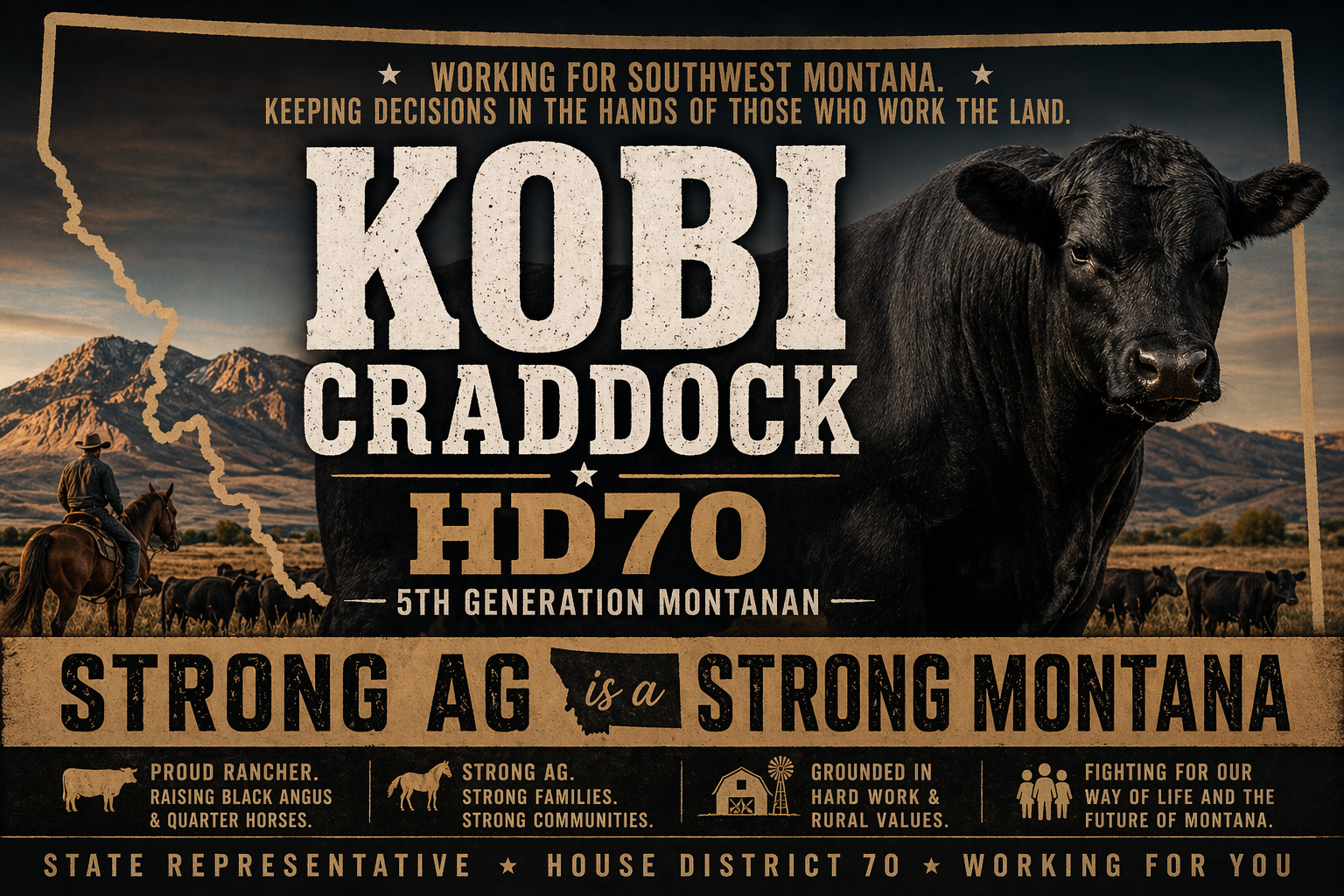
If I have the opportunity to represent House District 70, that is the approach I will bring to the Legislature:
listen first, respect private property, protect public access, support working farms and ranches, defend
healthy watersheds, encourage responsible management and look for solutions that leave the land better for
the next generation.
I have benefited from Montana’s public lands and waters my entire life. I want the kid growing up in
southwest Montana fifty years from now to have the chance to hunt public ground, cast a line into the Big
Hole, work a ranch, or simply experience the places that make this part of Montana home.
We do not have to choose between working lands and wild places, between agriculture and conservation, or
between private-property rights and responsible public access.
In Montana, finding a way to protect all of those things is part of protecting who we are.